


 The churches are much more unified than when I first arrived and it is exciting to see how God has worked in the relationships in the church over the last nine months. We thank you for your prayers and support.
 Editor's Note: Brittany's faith and willingness to step out of her comfort zone to meet a great need in the church is commendable. I hope and pray that more disciples will follow suit and get back into the missionary mindset and help strengthen our churches in greatest need.
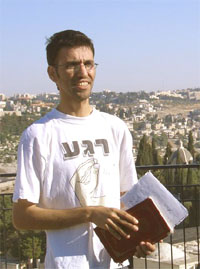 In March 2006 one of my best friends, Marie Sarah, who was living in Jerusalem, Israel called to tell me that she was getting married to the church leader, Aziz Sarah (pictured at right) and invited me to come to the wedding. She also expressed that the Jerusalem and Bethlehem churches were in need of missionaries to come and strengthen the churches. She stated that the churches had experienced a couple of very challenging years and were specifically in need of someone who was skilled in psychological counseling, song leading, leadership training for women, and planning events that would turn the focus of the church on God and away from the tense environment of the Middle East.
God has given me many of these skills according to His grace. When I heard of this need I felt as though God were calling me to go to Jerusalem to serve the churches there. I finished my Masters degree in Clinical Social Work in May, 2006 and was looking for an opportunity to use this training to serve God???s kingdom. After much prayer I decided to move to Jerusalem for one year to serve the Jerusalem and Bethlehem churches.
 I arrived in Jerusalem, Israel eight months ago. Although I had some idea of what the needs were in Jerusalem after my discussions with Marie, when I left Boston on June 15, 2006 I did not know what specific tasks God would ask me to do or how the church members would receive my coming. In the first three weeks of my trip I met with all the members of the church in one-on-one meetings and groups. In these meetings I began to see and feel some problematic dynamics that existed in the fellowship. Specifically, there were challenges to unity in the relationships, group dynamics and the focus of the church.
I was initially overwhelmed by the things that God revealed to me that needed to change in the church. However, I was also amazed at the disciples??? perseverance and commitment to their faith. These disciples face great persecution for their faith. Those who come from Muslim and Orthodox Christian backgrounds can be killed by their families for their conversions. Those who come from Jewish backgrounds can lose their jobs and are cast out of the community for their belief in Jesus. Even in the face of these dangers these disciples stay faithful to God. They truly inspire me.
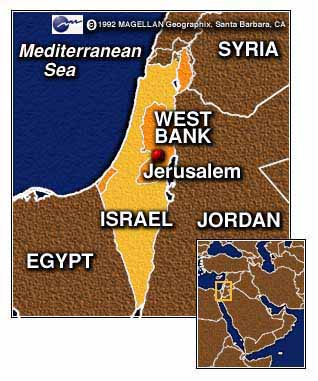 After a few months had passed God's plan for my time here began to take shape and He began using me to bring about great change in the Jerusalem and Bethlehem churches. In all the challenges that the churches faced there was one theme that stayed constant: the worldly principles of self-protective fear, quest for power, racism, and unresolved conflict were present in the church. Most of my current work with the churches is helping people see exactly where the world is having an influence on the church and to foster relationships that encourage repentance and movement towards true holiness. In preparation for this work I did an extensive study on what it means to be holy.
The English dictionary definition of holy includes the following sentence: "Holy refers to the divine, that which has its sanctity directly from God or is connected with Him." To be holy is to be set apart for a spiritual purpose, to be separate from the world and its principles. I learned that we are called "to be holy as God is holy" (1 Peter 1:15-16) and if we surrender to God He will make us holy through His spirit within us.
The Bible calls us to live as "aliens and strangers on earth, longing for a different country -- a heavenly one" so that "God will not be ashamed to be called our God and will prepare a city for us" (Hebrews 11:13-16). This means letting go of the world and its principles and loosening the ties that our culture has on us and become citizens of a different kingdom. Here in Israel/Palestine there are two distinct cultures, Palestinian Arab and Israeli. Both peoples are trying to live in the same city and carve out a space in the society for their culture, which creates great tension in the city and in the church.
 The Palestinian Arab culture is built on hierarchies. The patriarch in the family has full authority over family business and respect for this male figurehead is central to Arab culture and every day family life. The oldest son is next in command, but this second-string position can be taken over by another son at any time, resulting in a state of tension in Arab families as the men continually jockey for positions of power. This fight for power in the family also extends to political views among the Arab countries. Each country fights for power over the others and they do not see themselves as a united brotherhood.
This "power hungry" mindset was affecting the church in a few ways. Since in Arab families the patriarch is the only one who has the authority to direct the family, the disciples sometimes view the church leader in this way. They hesitate to use their gifts because they do not have the authority position. If they do have the leadership position and lose it for some reason then they stop using the gifts that they used previously when they had the leadership position. The culture tells the church that leadership positions are assigned by presenting oneself as the strongest. Leadership values such as humility and vulnerability conflict with the cultural expectation that leaders should not show weakness or seek input from others in "lower" positions.
In the past, the church here has suffered because men and women who present themselves as "strong Christians" are given authority and status as leaders, but become ineffective at shepherding the flock because their values are based more on the Palestinian/Arab culture than on Christianity. The leadership dynamic was also such that the competition for power that is present in Arab families was also present in the church. In December 2006, God exposed this issue when two dearly-loved brothers were expelled from the fellowship for division when they attempted to overthrow the leadership.
 My personal observations have led me to believe that, among other factors, the Israeli culture has been most forcefully shaped by their reaction to the Holocaust and other crimes against Jews. The people live their lives in constant fear of being attacked. This has resulted in a deep insecurity in the people regarding their ability to protect themselves both personally and nationally. They see the world through the lens of a victim. The nation of Israel has amassed great power in the region, but the people still see themselves as victims, ever struggling. Criticisms of any nature are viewed as threats.
In order to compensate for this victim mentality the Israeli culture has overemphasized their ideology of being God's chosen people. I have observed racism against non-Jews and a general sense of entitlement in the Jewish community as a result. I have also observed that while these factors serve to unite Israelis on an ideological level, it has not produced a loving brotherhood within the Jewish community on a day-to-day level. The government gives special privileges to Jewish people over others, but in grocery stores, bus stations, airports, and shopping markets the Jewish people act as if everything will run out before they get there and they will starve. They shout over each other, trample each other to get to the front of the lines, and have a general disrespect of each other.
 The Jerusalem church was greatly affected by this defensive stance, especially in how it affected relationships and walking with one another in faith. Giving input and sharpening one another in their walk with God was very difficult because of how disciples brought the "victim mindset" into the church. If two people disagreed on a disputable matter, both people felt attacked and a heated argument quickly ensued. People were afraid to share their opinions with one another and without these vulnerable interactions the relationships in Jerusalem had become shallow.
Disciples here struggle to be vulnerable with God and with each other because they are constantly afraid of being attacked. God used the incident in Bethlehem with the two divisive brothers to expose this dynamic as well. Throughout the situation with these two brothers many of the disciples in Jerusalem began to realize that their self-protective patterns had kept them from speaking up when they saw things in these two brothers' lives that were concerning and needed to be confronted.
In addition to the respective cultures of these two peoples the political situation in the region also worked to keep them apart. The media on both sides of the Israeli/Palestinian conflict influences how the groups think about each other and it is a constant battle to see each other as brothers and sisters instead of neighboring enemies. This is particularly difficult when something happens in Gaza or the West Bank that erupts anger in the Bethlehem church and shame in the Jerusalem church.
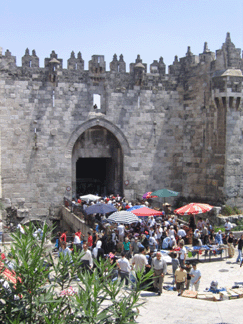 In Haggai 1:3-12 God rebuked the people through the prophet Haggai because they were spending time and effort on their own houses but had neglected the house of the Lord. God wanted them to build his house so he could dwell with them and be honored. God has used me over the last eight months to expose this same problem here in Jerusalem. The disciples had been focused on themselves, protecting themselves from hurt, following the status quo of the culture, and continuing in sins that were difficult to change. God's church had been neglected and it was no longer able to bring him honor or be a place where he could dwell. Yet our God is merciful and has called us to repent -- and just as the people in Haggai saw their fault and feared the Lord, the disciples here have turned toward him and are working on making the church glorifying to Him once again.
The book of Haggai also offers great hope. Haggai 2:9 reads that, "The glory of this present house will be greater than the glory of the former house." The disciples here are holding onto this promise that as God seems to have let the former church fall apart he will help us build a more glorious church that is focused on Him and built on his son, Jesus Christ. Both the Jerusalem and Bethlehem groups now meet together every week in a meeting place located on the border of Jerusalem and the West Bank where it is legal for Israelis and Palestinians to meet together. We will meet this way until the political situation prevents it.
 It is very inspiring to see each group (and me) struggle to sing in the other's language. I am truly enjoying watching the animated conversations as people try to communicate through body language and rely on the limited translators that we have. In the world these two groups are enemies and great tension exists between them even in peace organizations, but in the church that God is building through us they are brothers and sisters. We are becoming a family with open and honest relationships. It is amazing to see how the strengths of one group are the weaknesses of the other, and how God has put them back together so that they can help each other.
In Jerusalem I am leading a series of meetings on racism and harmful political views that may affect the church. The group is learning about what racism is and how it is maintained in Israel through the media and other societal constructs. We will be looking at how the Israeli and Arab newspapers and television affect the people's thoughts about the other side. We will also be assessing the church to see if any of these racist ideas have an affect on the relationships in the church and to work toward deeper unity. In the next few months we will be talking about the varying political views that members of the church hold and work towards a common understanding and commitment to biblical teachings regarding land, the use of violence, and evangelism in this region.
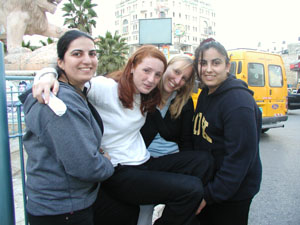 I am also working with the women in Jerusalem and Bethlehem to plan a women's retreat for the Jerusalem, Bethlehem, and Tel Aviv women. The theme of the retreat is God's grace. We will be focusing on how to understand and accept God's grace in the midst of two cultures and religions that are built on works-oriented doctrines. Our own fellowship of churches has also had an unbalanced view of the role of good deeds in salvation which also has affected the Bethlehem and Jerusalem churches over the past few years. As a result, the members have difficulty accepting God's grace in their lives.
The women's retreat will also be an opportunity for the Bethlehem women to build strong relationships with the Tel Aviv and Jerusalem women as they have been apart for several years due to the political situation and the restrictions on their movement. It will also be a time for in-depth Bible study and developing deep connections with God.
 I continue to lead a class on dealing with emotions and relaxation techniques. The tense political situation makes it difficult for people living in this region to feel safe and secure in their daily lives. The result of the two clashing cultures in Jerusalem is a constant feeling of pressure and fear of perceived threat. The church members who live in the city of Jerusalem feel this tension and pressure every moment of their lives. The disciples who live on the West Bank also experience fear and pressure as a result of the Israeli occupation.
In order to address this issue and try to relieve some of the tension that these disciples experience I have been leading a series of classes on controlling emotions through the use of meditation and relaxation techniques. This also gives the members a sense of power over their own experience in a place where they are often made to feel powerless. I am teaching them to have control over how they respond to situations that are out of their control. This has been very useful for them and a chance to have fun with one another as well.
The churches are much more unified than when I first arrived and it is exciting to see how God has worked in the relationships in the church over the last nine months. We thank you for your prayers and support. God has truly heard your appeals and is working powerfully to bring about unity and love through the bond of peace that we have through his precious Son. Please continue to pray for the churches to love each other deeply from the heart and to live as strangers here in reverent fear.
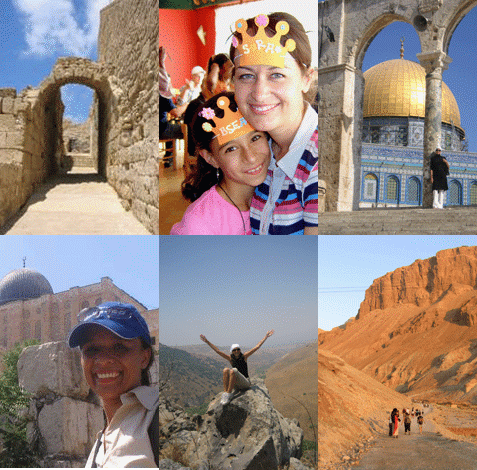 Please also pray for me to serve God with my whole heart, mind, soul, and strength. To all those who have supported me financially over the last eight months, thank you very much. The churches here are very grateful for your sacrifice. If anyone would like to give financially, I am still in need of $1,300 to complete the scheduled trip. Please contact my head of fundraising, Deborah Brass at This email address is being protected from spambots. You need JavaScript enabled to view it. or at (617) 256-7109. There is also an opportunity for disciples to come and visit the Bethlehem and Jerusalem churches on a mini- mission trip this summer. This will be an opportunity to see what God is doing in the Holy Land. The churches will be focused on teaching what they have learned this year about keeping worldly principles out of the church. Please visit the following website for details: http://www.missionsworldwide.org.
Editor's Note: To visit the Jerusalem Church of Christ website, go to: http://www.jerusalemchurchofchrist.org/.
To see what other needs the Jerusalem Church currently has, go here: http://www.jerusalemchurchofchrist.org/jmissions.html.
To read what the Jerusalem Church has to say about Brittany, go here: http://www.jerusalemchurchofchrist.org/jthanks.html.