“Really,” I asked somewhat surprised, but still encouraged, as those are words that no preacher is generally opposed to hearing. “I spent the last twenty years,” he went on, “being afraid of John 15 and constantly worrying that I didn’t and couldn’t ever measure up. Now I know what it means and I feel so encouraged and thankful to God.”
We sometimes encounter biblical passages that should be quite encouraging but, when not understood correctly, can cause us a great deal of fear and foreboding. For me growing up it was all the passages about Jesus’ return. I had been so inundated with incorrect teachings about an impending rapture and subsequent tribulation that I was quite afraid, even as a new disciple, of any talk of Jesus’ return, rather than being encouraged by it as I should. That doesn’t mean that the Bible isn’t full of passages that should convict Christians or cause some healthy fear of God for a non-believer, but it does mean that we should be careful to understand passages in the manner in which they were intended.
One of those passages that is often misunderstood and taken to be a rather ominous section is the aforementioned John 15. To fully understand John 15:1-8, we have to understand two things specifically. The first aspect is the immediate context of John 15. We find it in the middle of a section in which Jesus is trying to comfort his closest followers who are rather disturbed by the realization that Jesus is about to leave them. How will they manage without him? This means that we must understand John 15 in a manner consistent with the fact that Jesus is bringing words of comfort to his disciples.
The second aspect is the Old Testament background to the words of Jesus. When Jesus speaks in John 15, he is making clear allusions to Old Testament passages that were well known in his day. We must understand those passages before we can hope to fully grasp what Jesus is saying here.
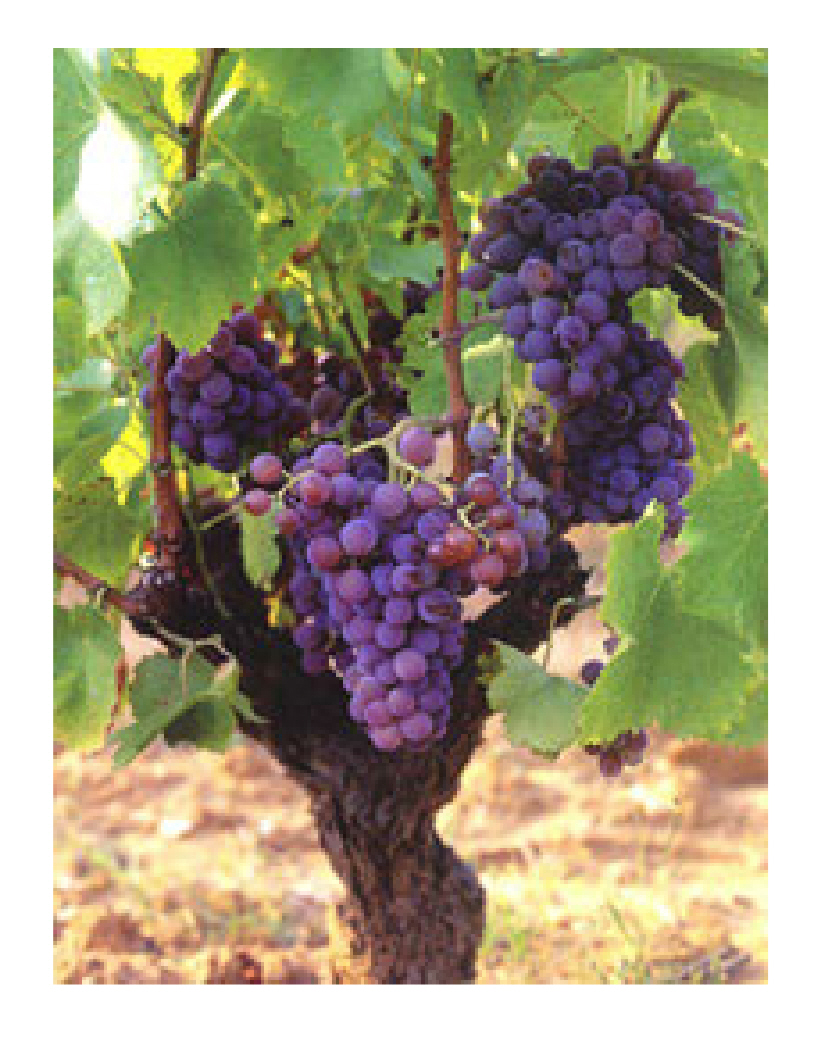
No teacher has ever been better at the concept of teaching through using things familiar to his audience than Jesus. Jesus used something that they all knew to make his point. Vines were everywhere in ancient Israel, but more than that, the Old Testament had frequently used the concept of a vine to explain Israel’s relationship with God. Jesus would use the familiar concept of how vines worked along with the common imagery of Israel being God’s vine to teach his disciples about the new creation.
In Jeremiah 2:21, the Lord tells Israel that “I had planted you like a choice vine of sound and reliable stock. How then did you turn against me into a corrupt, wild vine?” The imagery of Israel as God’s vineyard, planted by him, is used throughout the Old Testament (Isa. 27:2-6; Ps. 80:8-16; Jer. 2:21; 6:9; 12:10-13; Ezek. 15:1-8; 17:5-10; 19:10-14; Hos. 10:1-2; 14:7).
Perhaps the most poignant of the Old Testament vineyard references and one which Jesus seems to be using as a clear and primary backdrop to his words here is Isaiah 5. You cannot truly understand the fullness of Jesus’ words in John 15 without being intimately familiar with Isaiah 5. Isaiah speaks for God saying that He will sing “a song about his vineyard,” which, as verse 7 makes clear, is Israel. God prepared and planted his vineyard and watched it carefully, tending it so that it would produce fruit, which is the whole purpose of a vineyard. When he looked for a “crop of good grapes,” though, all he found was “bad fruit.” The Lord asks “what more could have been done” for His vineyard beyond what He has done and declares that Israel will be made a wasteland because of their lack of fruit.
In the context of this passage in Isaiah, it is clear that the fruit God was looking for was faithful obedience to His Covenant, His word. He desired Israel to be faithful and keep up her end of the Covenant, but they failed again and again, producing only the bad fruit of disobedience to God’s Covenant. They were found to be completely incapable of bearing good fruit, yet in passages like Isaiah 27:6, the text looks forward to a time when “In days to come Jacob will take root, Israel will bud and blossom and fill all the world with fruit.” How can Isaiah speak both of Israel being made a wasteland for disobeying the Covenant and there being a time when Israel would finally bear fruit and obey God’s Word, living up to the calling to keep His Covenant?
As Jesus spends his last night with his faithful disciples, he explains this mystery in a way that no one could have expected. As he finishes up his previous teaching in the upper room, Jesus calls his disciples to leave with him. It doesn’t take much imagination to speculate that as they left and walked toward the Garden, Jesus stopped at one of the many vines growing in Jerusalem and taught them an important point.
Israel had failed to keep God’s Covenant, and now their vocation had passed on to God’s true representative, His true son (cf. Ex. 4:22). He was the true vine, planted and cared for by the Father, the gardener. Israel as a nation would be made a wasteland very soon (a prophecy that was fulfilled in 70 AD) and Jesus was boldly declaring that he was the authentic Israel, who had done the Father’s will and would act as the representative for God’s people. He alone would be the suffering servant of Isaiah 53 that would be crushed for the sin of the world. Just as God had chosen the inheritance of the Covenant and status as the people of God to pass through Jacob and not Esau, now the status of the true Israel would pass to Jesus alone.
This imagery is monumentally important to fully grasp. Jesus alone is the true Israel that will experience all that God had promised for his people including resurrection and entrance into the age to come. He is the true vine, the true Israel, and anyone who would be part of God’s people must enter into that vine as one of the branches. This is the central point that Jesus is teaching his disciples. To be the people of God, they must enter into his life (Jn. 11:25, 14:6).
It is only through his life that people will be able to bear fruit and do the will of God. Only by entering into the life of Christ and living according to the teaching and guidance of the Spirit can we uphold God’s Covenant. It will all be the Father’s work through the life of Christ and the guidance of the Spirit, not anything that we do on our own strength. Jesus is not issuing some sort of veiled metaphorical threat to his disciples but is encouraging them to continue to take heart after he has left them and returned to the Father. He will continue to provide for them. They will be able, by entering into his life, to do the very thing that not even the children of Israel could do: they would be able to please God and uphold the Covenant with him.
Some have asserted or imagined that “bearing fruit” here has to do primarily with evangelism and that Jesus is saying that if we don’t constantly convert others to the faith that we will in turn be cast out of his Kingdom. But that is nowhere in sight in this passage. Faithfully bearing witness to the Gospel is one component of many in the life of Christ but Jesus is hardly threatening his followers with the idea that they must make more disciples or be in danger of being cast out. Instead, Jesus is promising that those who enter into his life, will be transformed into his image (cf. Col 3:10; Eph. 4:22-24) and be given the resources to remain in Christ and bear the fruit that God has always looked for. Bearing fruit, though, is God’s work through the life of Christ, not our own. Simply put, being in the vine means that we will finally be able to please God because by being in his life, Jesus will make it so.
As comforting as this concept is, Jesus doesn’t want his disciples imagining that life will be nothing but wonderful from this point on out. As they all knew, vines needed to be pruned so that the growth they experience is productive and in the right direction. They should not be surprised that there will be much pruning throughout their lives, transforming them ever closer to the image of the King. Jesus wants to encourage them as well though, so he reminds them that they have already started that process. They are already clean, a word that means much the same thing as “prune.” They have gone through much testing and produced good fruit already because they have accepted Jesus’ word.
Yet, there will always be some who seem to be part of the vineyard but who have not genuinely accepted the life of Christ as their own. Jesus is, perhaps, referring specifically to Judas Iscariot in verse 6, but there will always be those who do not bear fruit. If the life of Christ is not visible in one’s life (cf. Gal. 5:22-25) there has to be questions whether they have actually died to themselves and are truly part of the true vine. Those that do not surrender their own life and remain in the life that will bear fruit will be cut off and thrown into the fire, says Jesus, using imagery that comes from Ezekiel 15:3-5.
The great and wonderful mystery in all of this is the call to remain in Christ. If we do, he promises that we will bear much fruit (v. 5) and that his word will remain in us (v. 7). Then we will be slowly transformed so that our desires and will are directed by his and whatever we ask will be done. It is not that Jesus will turn into a divine Santa Claus, but that we will be transformed so that the things we ask for will be things consistent with the life of Christ.
The question that must be asked, then, is how do we remain in him? Certainly we must remain people of prayer, the Word, and worship in ways that genuinely connect us with the will of God. And certainly we need to follow the Scriptures in the constant trek of dying to self or putting off the old, and to live the life of Christ by putting on the new (cf. Eph. 4:20-32). But an equally vital aspect of remaining in Christ is to remain in the community, the body of Christ that he has formed in his life. The only way to genuinely fulfill all that God has called us to in the life of Christ is to live in a community of those committed to living the life of the new creation who will call us to do the same (see Jn. 15:9-17). We need the other branches to truly remain in the vine but that does not mean that we rely on their strength or ability because they are only there through the power of the Spirit themselves.


 He walked up to me with tears in his now reddened eyes after the sermon was over, which seemed a bit odd considering it wasn’t a very emotional type of lesson. Before I could even ask him what was going on, he blurted out, “that sermon changed my entire life as a Christian.”