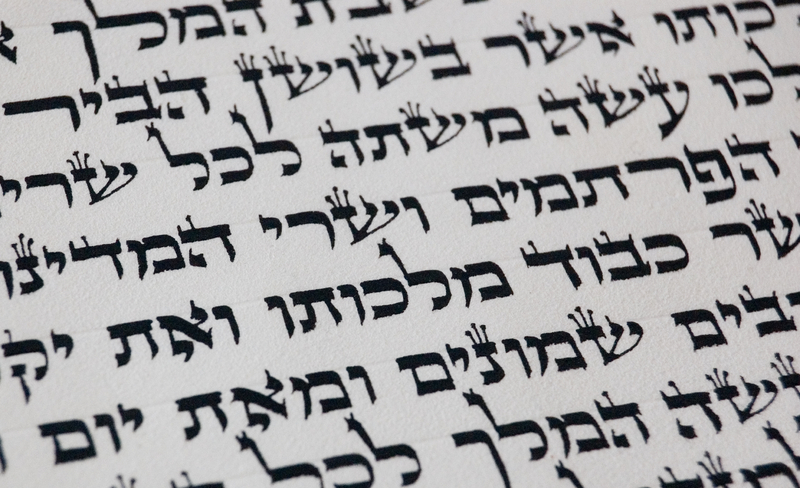
Purim is a “cool” holiday and not just because it occurs during late winter! Like Passover and Hanukkah, this holiday involves the retelling of a series of historical events surrounding oppression that resulted in liberation due to the courage and faith of particular individuals. Purim is found in the Hebrew Bible in the scroll titled Megillah, we commonly know as the Book of Esther. There we are taken on a journey back to the Persian Empire and observe the hand of God working behind the scenes to preserve his people while exiled in a foreign land. The book of Esther contains a story full of intrigue, irony,surprises, suspense, humor, and several amazing events of “coincidence”. The book opens with a beauty contest and ends with a massacre. It contains the tale of the beautiful Jewish maiden Esther, who wins the favor of the Persian 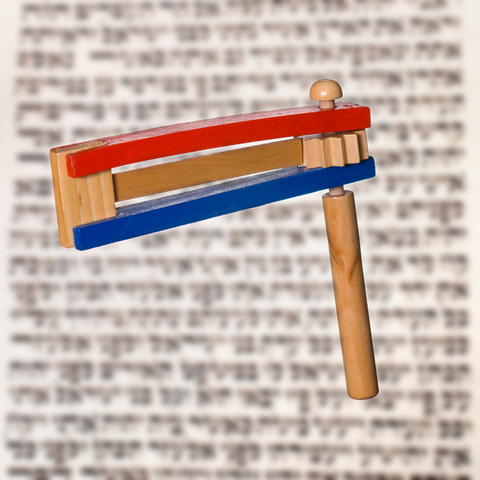 King Ahasuerus (possibly Xerxes) and becomes his queen. The story also revolves around an intense hatred for Esther's cousin, Mordecai, by an evil royal official named Haman. Haman persuades the King that the Jews are a seditious people and should be annihilated. A lot (pur) is cast and the date of destruction is determined as the thirteenth day of the month of Adar (equivalent to our March).
Mordecai shares this plot against the Jews with his cousin, queen Esther, and begs her to speak to the king in defense of her people. Although reluctantly at first, she eventually agrees and asks the Jews to hold a fast on her behalf. In a brilliant plan she decides to take a risk by inviting the King and Haman to dine with her. Meanwhile, it comes to the King's attention that Mordecai had once averted a plot against the King's life. To reward Mordecai, the king, (ironically), commands Haman to perform the task of parading Mordecai through the streets in royal robs, shouting his praises. The reader can only imagine the seething resentment and bitterness as Haman is forced to humble himself by being forced to not only witness this honor for Mordecai but to be ordered to be the one to carry it out! At a special dinner the next day, Esther the queen reveals her Jewish identity and denounces Haman's plot. The king commands that Haman be hanged, and, since the decree against the Jews cannot be averted, he ordains that the right of self-defense be formally granted to the intended victims. This is how the thirteenth of Adar became a day of triumph for the Jews, and the fourteenth became a day of celebration and gift giving (shalach-manot)--the day celebrated through the ages as the Feast of Lots, or Purim.
Esther herself, is a study of great character; a gutsy young woman (possibly a teenager) who had both beauty, brains, strength of character and spiritual focus all instilled within by her uncle Mordecai who raised her. She didn't put her trust in her outward beauty or brains but in her relationship with God. In looking for examples of common people who became heroes and heroines she is a great study for young people today! Mordecai is no slouch himself. And Haman? Well let’ s just say he should be included in the list of world’ s greatest evil men.
With its traditions of giving of gifts, bringing gifts to the poor, and dressing up in costumes the holiday of Purim shares several customs in common with other festivals however, its uniqueness resides in its story of numerous reversals of circumstances. For that reason, the best descriptive title I can think of for Purim is “ the Upside Down Holiday." While Purim commemorates the day originally set aside to wipe out the Jewish race, throughout the book of Esther, the tables are turned. The very day in which the Jews were going to be exterminated became their day of deliverance. Those in prominence were brought low and those who were considered lowly were raised up in honor. Those who built the instruments of death
became the very ones who died by them. It’ s an engaging story for both young and old. It’ s a story of drinking parties, beauty contests, and reversals of fortune, of intrigue, adventure, heroines, vengeance and villains.
God’s Presence behind the scenes
Keep in mind that throughout the book of Esther the name of God is noticeably absent. However, it’s evident that His hand is at work behind the scenes. Purim became transformed into an occasion of great popular significance for the Jews, who have lived throughout much of their history in the shadow of larger nations, often subjected to terrible persecutions. Purim
came to symbolize their miraculous deliverance and power of survival. Indeed, although God is never mentioned, the story of Esther suggests that salvation from danger is divinely appointed. Mordecai says to Esther (4:14): "For if you remain silent at this time, relief and deliverance for the Jews will arise from another place….and who knows but that you have
come to royal position for such a time as this?" The public fast that Esther commanded her people to observe was an effort by the Jews to remind God they were keeping the duties of their covenant; God in turn should remember their faith and save them. Just like today, He is always working on behalf of those who love Him - even when it doesn't appear so obvious.
Lessons for us today in the book of Esther. Purim contains several other relevant insights and lessons for us today. Focusing on Purim helps raise awareness regarding an on-going spirit of anti-Semitism that has been threatening to exterminate the Jewish People throughout history. For example, Hitler's idea of the "Final Solution" was not so original. Throughout the Torah we see the children of Abraham being bullied even close to annihilation. Hints of this enmity go back to the earliest portions of the Genesis. Beginning with Satan in the garden, to the feud between Esau and Jacob, to the attack by the Amalekites of the Israelites following their release from Egyptian slavery (Exodus 17). Even the Book of Revelation (Rev 12) implies this ongoing struggle and conflict and connects it to the struggle to bring the Messiah into the world. The spirit of Esau, and later the spirit of Amalek, (the earlier descendants of Haman) attempts to erase the Jewish race remain alive today and infact remain at the core of the Middle East conflict today. The book contains valuable lessons on taking responsibility, self-sacrifice for doing what's right even in uncertain times. There are dramatic lessons on the consequences of pride and the rewards of courage and humility. Mordecai, the Jew, just another captive who was viewed as a nobody, God raised him up to be a somebody, a national celebrity. On the other hand, Haman “ the Agagite” , who thought he was a somebody- always due honor, ended up being forced to swallow his pride along with a few other dishonoring moments. (Like being executed on the very gallows he prepared for others to die on).
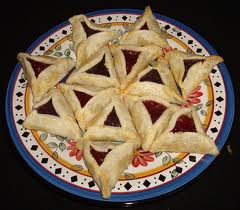 On Purim, after reading the story of Esther, the traditional Jewish customs for this holiday include enjoying a great feast, dressing up with colorful costumes to reenact the story, eating traditional cookies called *Hamentashen, and drowning out any mention of the name of “Haman” whenever he is mentioned.
There is an emphasis on giving of gifts and reaching out to the poor.
Beneath all of the festivities there is a serious undertone: Purim, more than any other Jewish holiday, characterizes the concern of the Jews about their status as a minority people. It is also their one formal occasion to laugh at their institutions and history while expressing fear of physical danger. Purim is the only Jewish holiday that deals specifically with the phenomenon of anti-Semitism (other holidays such as Passover and Hanukkah deal with oppression in a more general sense but not with ethnic hostility). Recent history in Europe and the Near East suggest that the religious persecution commemorated by the Feast of Purim still lives, side by side with the holiday.
We must never lose sight that Jews are the men and women whose courage and determination made it possible to withstand ongoing oppressions, survive as a people against all odds, and ultimately made it possible to bring our Messiah into the world. Consequently, His coming provides the greatest of deliverances and consequently the greatest of joys. This essay has attempted to highlight several distinguishing characteristics about Purim and its relevancy for all believers.
For today, do yourself a favor and read the book of Esther and relish in observing God’ s amazing work behind the scenes. Most importantly, rejoice with your Jewish friends that this event happened. Find yourself a Jewish synagogue to visit and enjoy an entertaining and educational Purim play that recounts the events that began as a catastrophic crisis and ended as an amazing turn of events, over throw of evil, freedom and prosperity for those who were originally targeted to die. It will be good for your faith, your children’ s faith and lead you to express heartfelt praise and worship to Hashem. our Lord. Tell your kids about it, rejoice and be glad today that you are alive and please pass the Hamentaschen* .
Happy Purim, -- Phillip Lester
* Hamentaschen* is a three cornered cookie filled with jelly, a traditional pastry often associated with Purim. The triangular shape is patterned after the three cornered hat of Haman (the villain) of Purim.

 If you were not aware – this Sunday commemorates a special day on the Jewish Calendar known as Purim! In a world of blizzards, earthquakes, and Tsunami’ s, it’ s always good to reflect on God's promises and protection of his people. This year, March 20-21, 2011, Jews around the world will celebrate two days of joyful activities and reminders of God's faithfulness in preserving their people. For several reasons all disciples, Jewish and Gentile, would do well to recognize and celebrate this popular Jewish holiday.
 ot only educational and fun, but quite evangelistic as well! Recognizing the meaning and participating in such celebrations conveys a spirit of support and appreciation of the Jewish people.